Conventional estimate
Fleet average × distance × cargo
Useful at a high level, but it can flatten operational differences.

Our first research area
Developing more detailed ways to measure the emissions of maritime transport, using real operational data on vessels and cargo.
From the total to the detail of each shipment.
Today, most estimates of shipping emissions start from averages per ship or per route. Our approach goes into the detail: every leg of the voyage, every stay in port, every cargo on board. That is the level at which you can see where emissions actually arise, and where they can be reduced.
Every vessel its size, its engines and the state of its hull since the last dry-docking
Every voyage leg the distance, the speed and how long the ship spent in each port
Every cargo on board its weight, its type and the extra energy of reefer containers
From average factors to the real voyage.
Conventional estimate
Useful at a high level, but it can flatten operational differences.
DatamarLab approach
Detailed operational data linked to the cargo carried on each leg.
Six questions the report answers.
Scientific research needs a method that can be applied in the same way to any scenario. In the first report, we applied ours to a full rotation from South America to Asia.
How much the voyage burned and emitted, tank-to-wake and well-to-wake, and its intensity per TEU.
The weight of the South American coastal calls and the Asian port calls against the ocean crossing.
Each cargo accounts only for the legs it was on board.
How much of the voyage’s emissions come from reefers.
How long the ship spent at berth and what it emitted standing still, against sailing.
Emissions, GFI and cost of the voyage on LNG, methanol, e-methanol and e-ammonia.
From one voyage to a 50-vessel fleet in the coming months.
One voyage analysed leg by leg, per shipment.
Demonstrated50 ships, transshipment and biofuels.
In progressMaritime and Port Analytics.
Next streamsEvidence for decisions across the system.
Understand operational and voyage-level emission patterns.
See how port and berth operations connect to journeys.
Build a more detailed view of transported cargo emissions.
Ground standards and policy in transparent methods.
Scientific rigor. Shipping in our DNA.

Chief Scientist
Professor at Unifesp and researcher in artificial cognitive systems, leading DatamarLab’s scientific program with rigor, transparency and practical relevance.
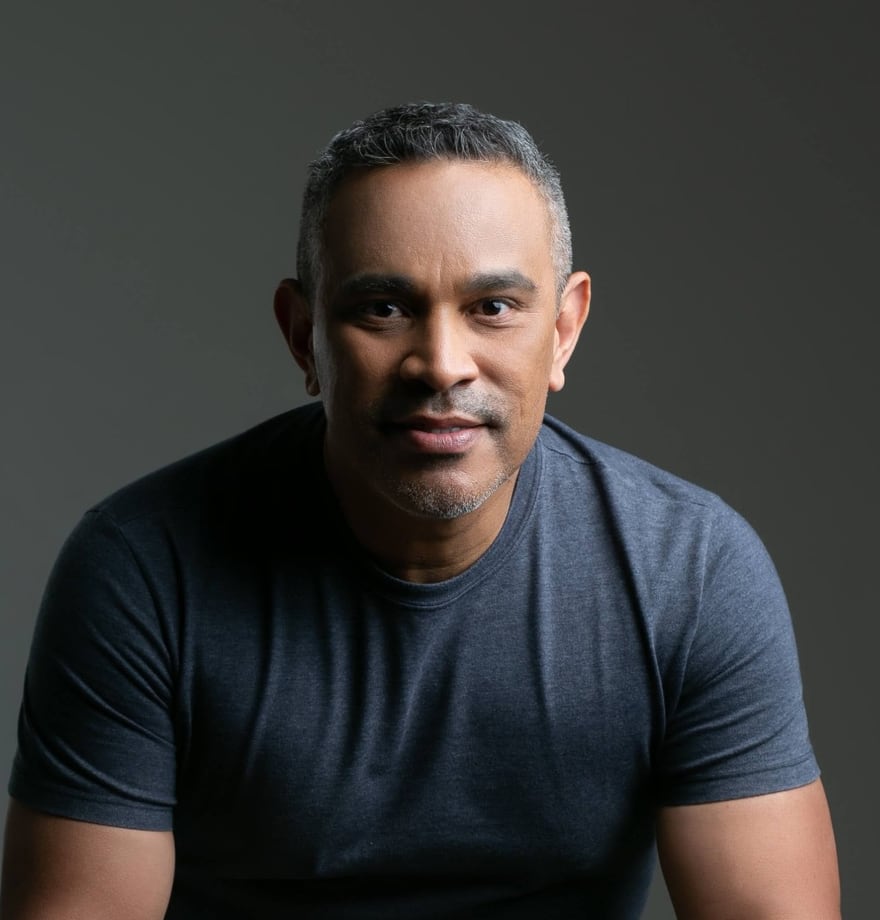
CIO, Datamar
The mind behind DatamarLab, CIO at Datamar and a technology executive in data intelligence for foreign trade and maritime logistics, leading the databases and platforms that support decisions for companies, government authorities and trade agents.
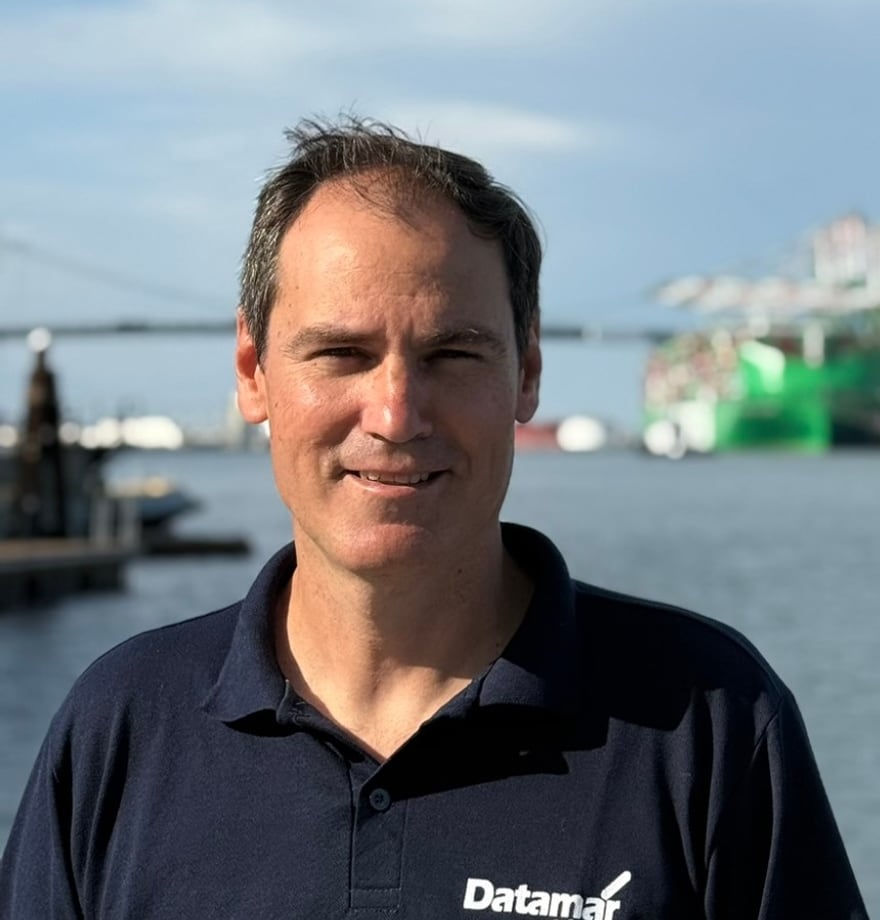
CEO, Datamar
CEO of Datamar since 2007, leading strategy, product development and international expansion, with a focus on turning complex trade data into practical intelligence for decisions across the maritime and logistics sectors.
Partnerships that extend the research.
In each research area, DatamarLab seeks partners who extend the reach of the work. In decarbonization, we partner with the RCGI-USP Carbon Registry, Brazil’s first national carbon credit registry, based at the University of São Paulo’s Research Centre for Greenhouse Gas Innovation.
Visit the RCGI-USP Carbon Registry (opens in a new tab)
Read the research.
Executive report
Key findings translated for maritime decision-makers.
Scientific article
The scientific methodology behind the report.
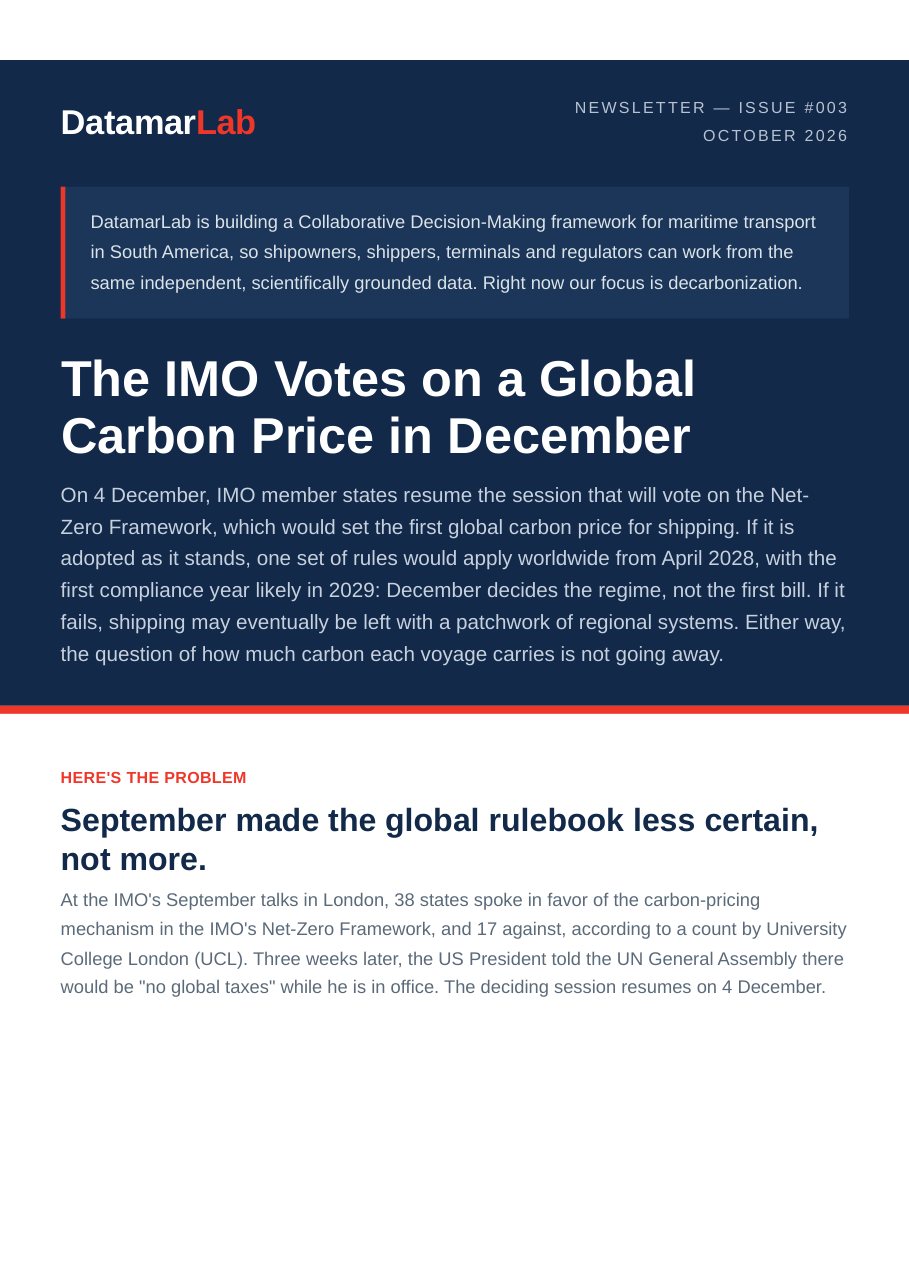
Follow the research as it develops.
Monthly insights, published on the first working day of each month. 2,500+ subscribers.